My Self-Publishing Experience

Ten years ago, I wrote an upbeat fictionalised memoir The House That Sat Down Trilogy about the time that my house fell down and I ended up living in a tent in the back garden with my husband and four children.
With no idea what I was doing, I self-published that manuscript with the help and encouragement of my teenage daughter. It did surprisingly well, winning a couple of Chill With A Book Awards, which was a wonderful experience.
Now, ten years on, I am a full-time writer with a traditional publishing contract.
I recently gave a couple of workshops with the Hampshire Learning in Libraries program, in which I discussed all of the various types of publishing that I have had experience of on that writing journey, including Self-Publishing, Partnership Publishing and Traditional Publishing.
There were so many questions from writers at those workshops about self-publishing, that I thought it might be worth expanding on a few aspects here. As always, this blog is based on my own personal experience and not intended to be in any way a complete and/or infallible guide. In other words, please make sure you do your own research before making any decisions.
It’s also worth having a think about what it is you want to achieve from self-publishing. Do you want a career as a writer? Or, do you want to have a printed volume of your work to give to friends and family? Both goals (and anything in between) are of equal value. It is good to know roughly where you are going before you start.
Remember, whichever publishing platform you use, whether it is Amazon KDP or Ingram Sparks or another such company, they are exactly that; a platform. They are not a publisher. What you put in to the system, in terms of manuscript quality — including editing and typesetting as well as cover design — is what you will get out. Which is why there is a huge difference in the quality of the self-published books out in the world. Some are incredibly professional and others are perhaps not quite so proficient. Done well, it is impossible for the majority of readers to tell whether a book has been self-published or traditionally published.
When you self-publish, YOU are the publisher. Quality control is up to you and will make a world of difference to how the finished product performs in the market, assuming sales are what you are after.
Whichever platform you choose there will be positives and negatives, so it important to go with the one that suits you.
Regardless of that choice, you will need an ISBN for your book. This is the International Standard Book Number that you see on the back of books by the barcode and also on the copyright page inside.
I bought mine through Nielsens UK ISBN Store https://www.nielsenisbnstore.com/.
You will need an ISBN for each version of your book, whether it is hardback, paperback or eBook (although for eBooks ISBNs are optional, I still think it is a good idea to have one). They come as individuals or bundles.
Once you have actually published your book (or books) each version will need to be registered with Nielsen’s Title Editor https://www.nielsentitleeditor.com/titleeditor/ and to do this you will need to include all aspects of your book such as the dimensions, page numbers etc…
Remember that if you publish in the UK (including self-publishing) you are legally obligated to send a copy of your book to the British Library https://www.bl.uk/services/legal-deposit within one month of publication. (Note this is not the same as getting your book registered to appear in library catalogues. That is a whole other ballgame that I don’t have the time to go into right now. Sorry! Another blog post, another time, perhaps…)
Whichever platform you chose to self-publish via, you might want to consider setting up or claiming your author profiles on various websites because this allows you to create a brand and showcase your work.
Examples of these sites include:
Amazon - this is especially important if you are selling via Amazon regardless of whether you have used KDP to actually produce your book because Amazon (whether you like it or not and I am aware that opinions are divided) is one of the largest book marketplaces in the world.
Goodreads - this is a social book cataloguing website where readers go to discover and review books. In my experience, your books will find their way on to this website so it’s worth claiming them. (Note they are not sold through this website, merely discussed. Readers often go there to find out what to read next.)
Bookbub – this is a free service that helps readers discover books. Authors usually set up profiles to be able to manage their work’s visibility and build a brand.
There are others…

That is a brief whistle stop tour of some of the elements of self-publishing that I wish I’d known about when I started out ten years ago.
I’ve loved every minute of the process even though I was unaware at the time that I was only at the beginning of a writing journey that would take me on to sign a six-book deal with Boldwood Books to write WW2 historical fiction.
The first in the series The Resistance Girls is available in all formats, including physical print copies as well as audio and eBook.
Here is the link to buy: https://bit.ly/44KxiJI
Book two A New Recruit for the Resistance Girls is due to be published in October 2025 and currently available for pre-order. Here is the link to pre-order your copy should you wish: https://bit.ly/3ItOLPf
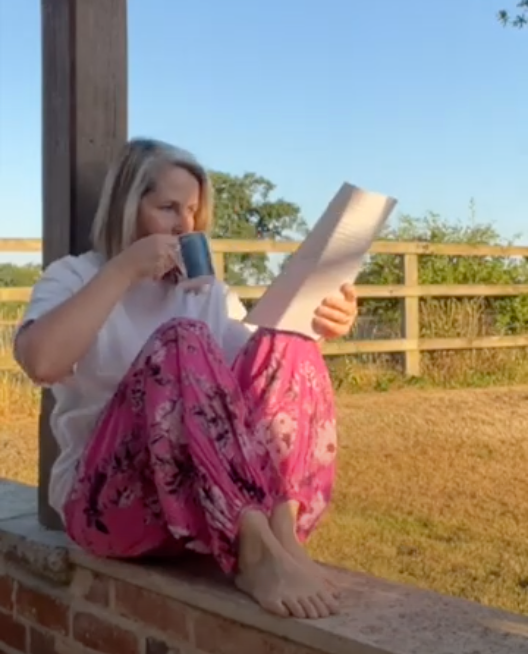
I am busy writing Book 3 this summer ready for publication next April.
If you do decide to self-publish, I wish you all the luck in the world.
Who knows where your journey will take you?
Love
Alice
x


Comments